Skills
Instructions an agent loads by itself when a task matches.


Skills Manager is the one place agent instructions live, get checked and get approved. Every agent then reads the same approved version.
Somebody built something that works. It lives in their own CLAUDE.md, a personal upload or a one-off directory, and every version of "how do I give this to everyone else?" has died on contact with security.
The same skill has been written three or four times, because nobody could find the first one and nowhere was allowed to be the answer.
Content came in from outside carrying no record of its origin, licence or version, and reached an agent holding production credentials with nothing in the way.
Nobody can say afterwards where a given instruction came from, or who let it in.
Your people use three or four different AI assistants. Each one has its own rules about whether skills and MCP servers can be added and by whom, so whatever governance you have covers one of them.
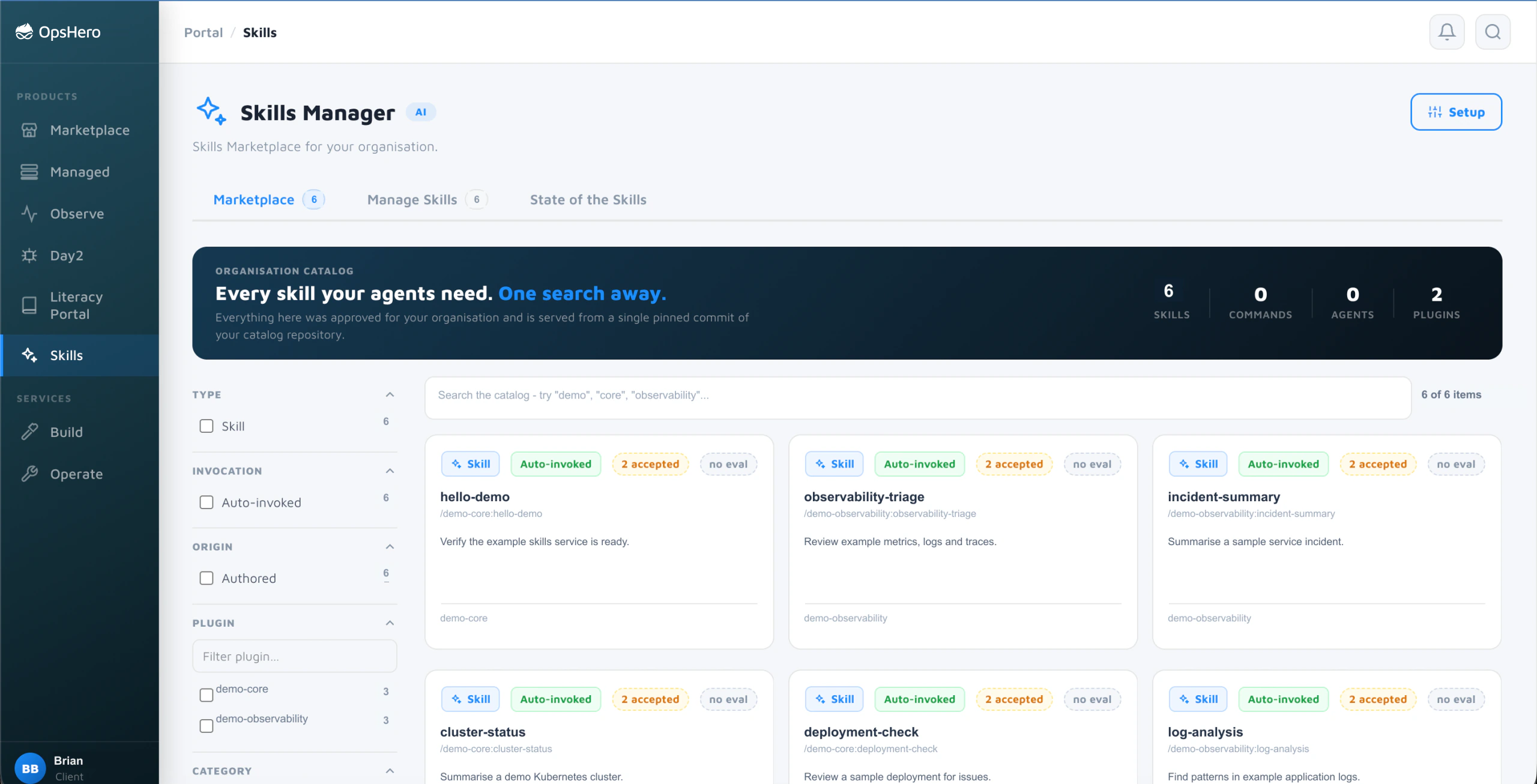
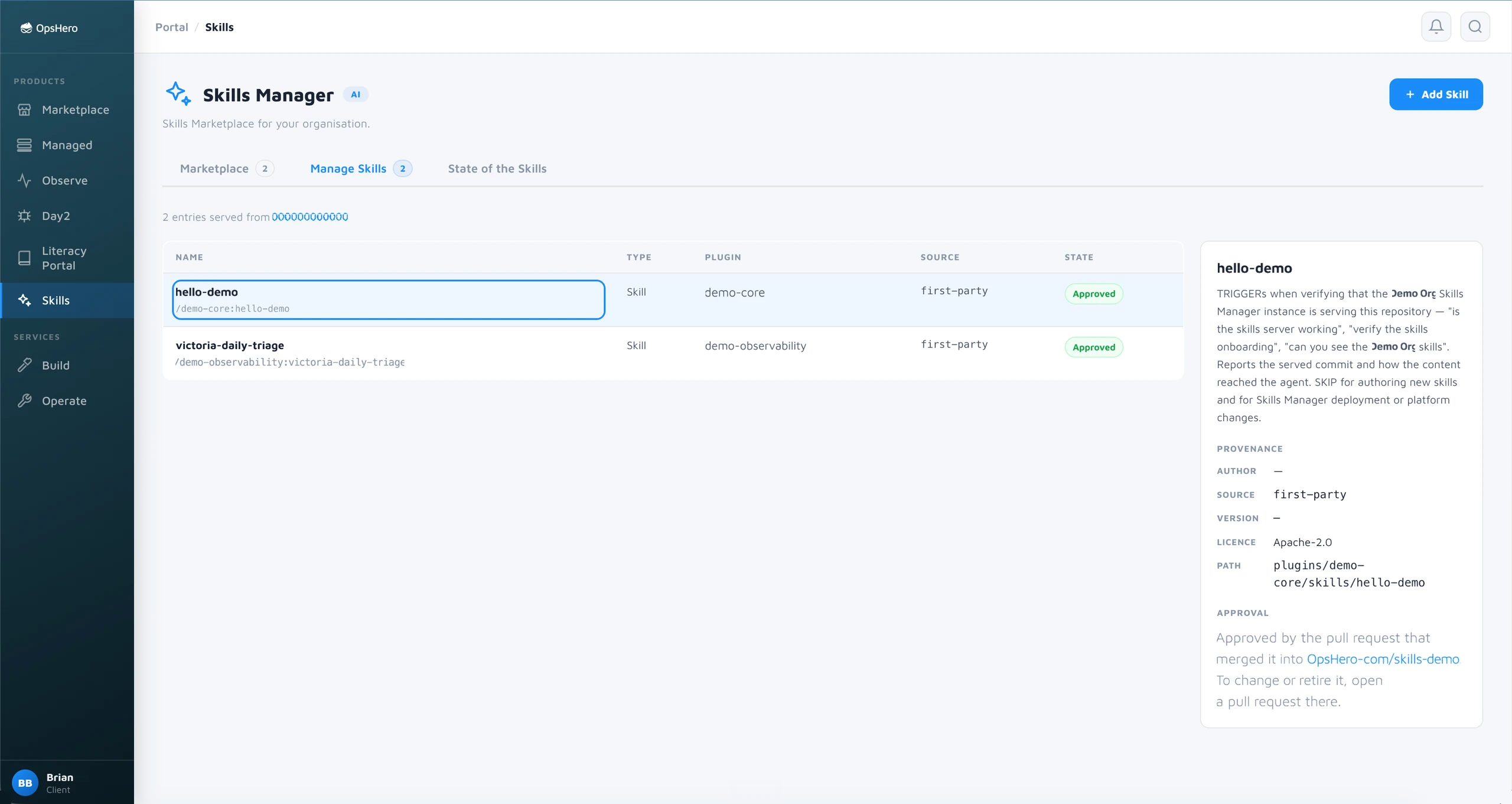
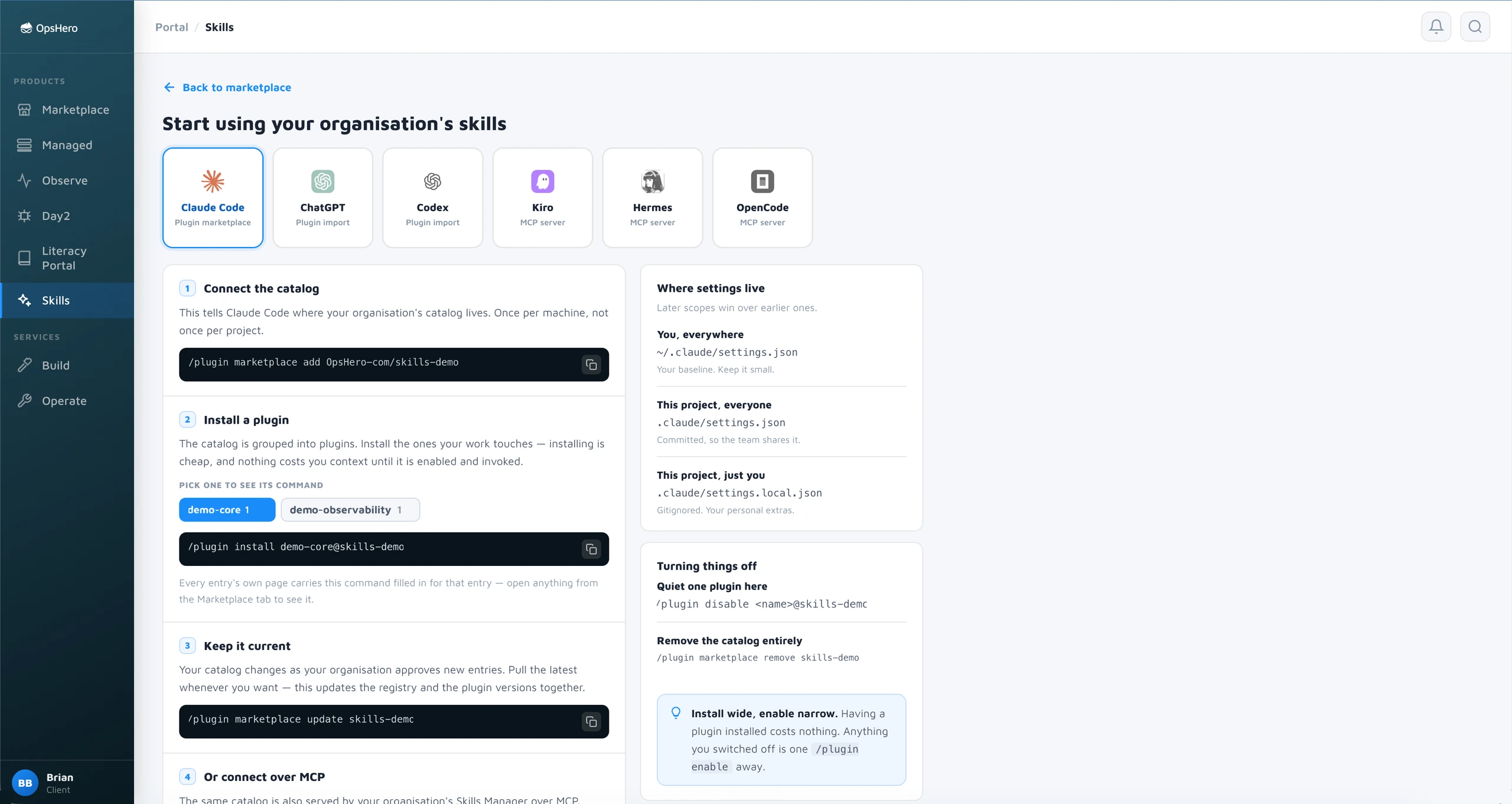
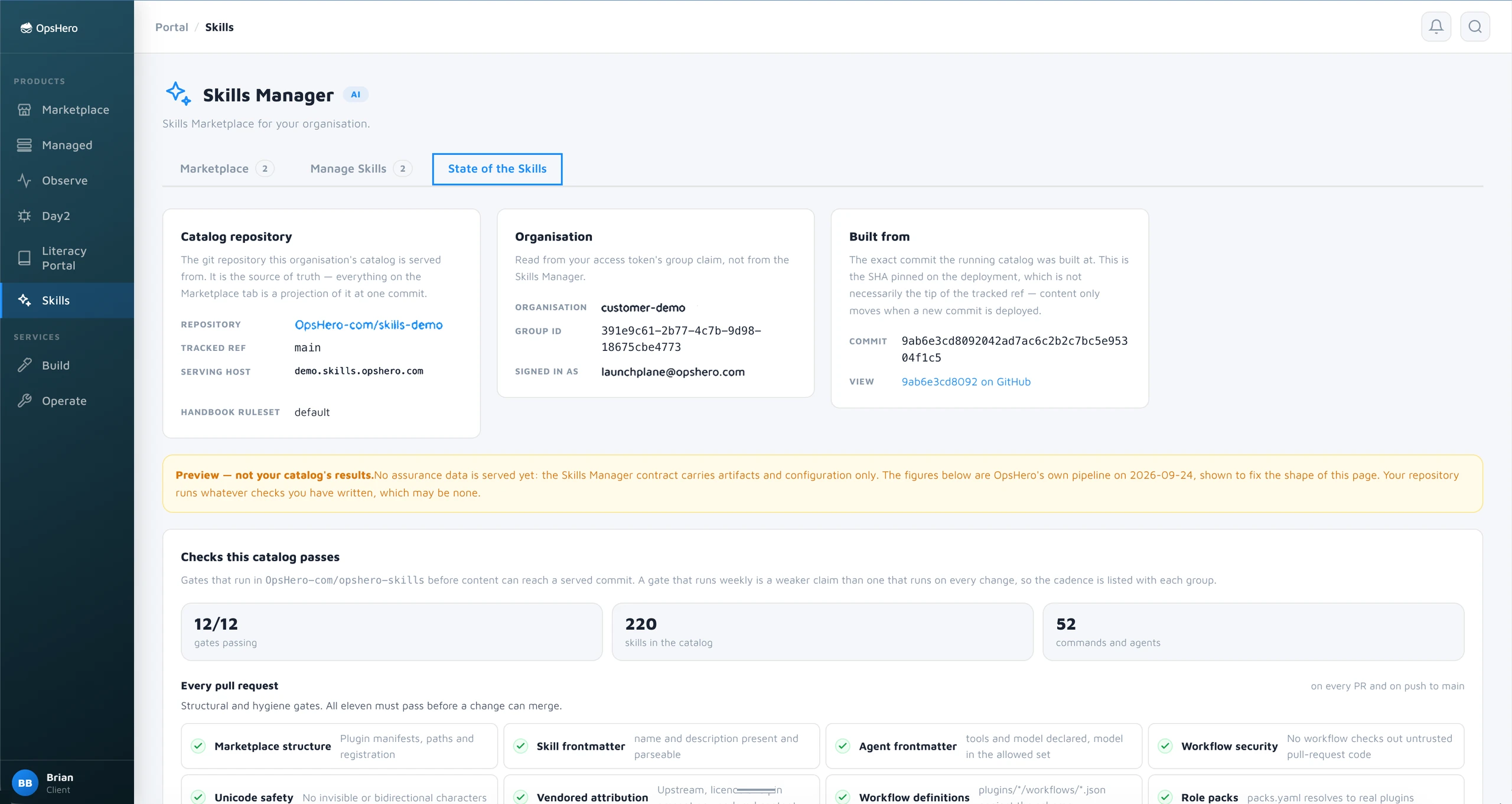
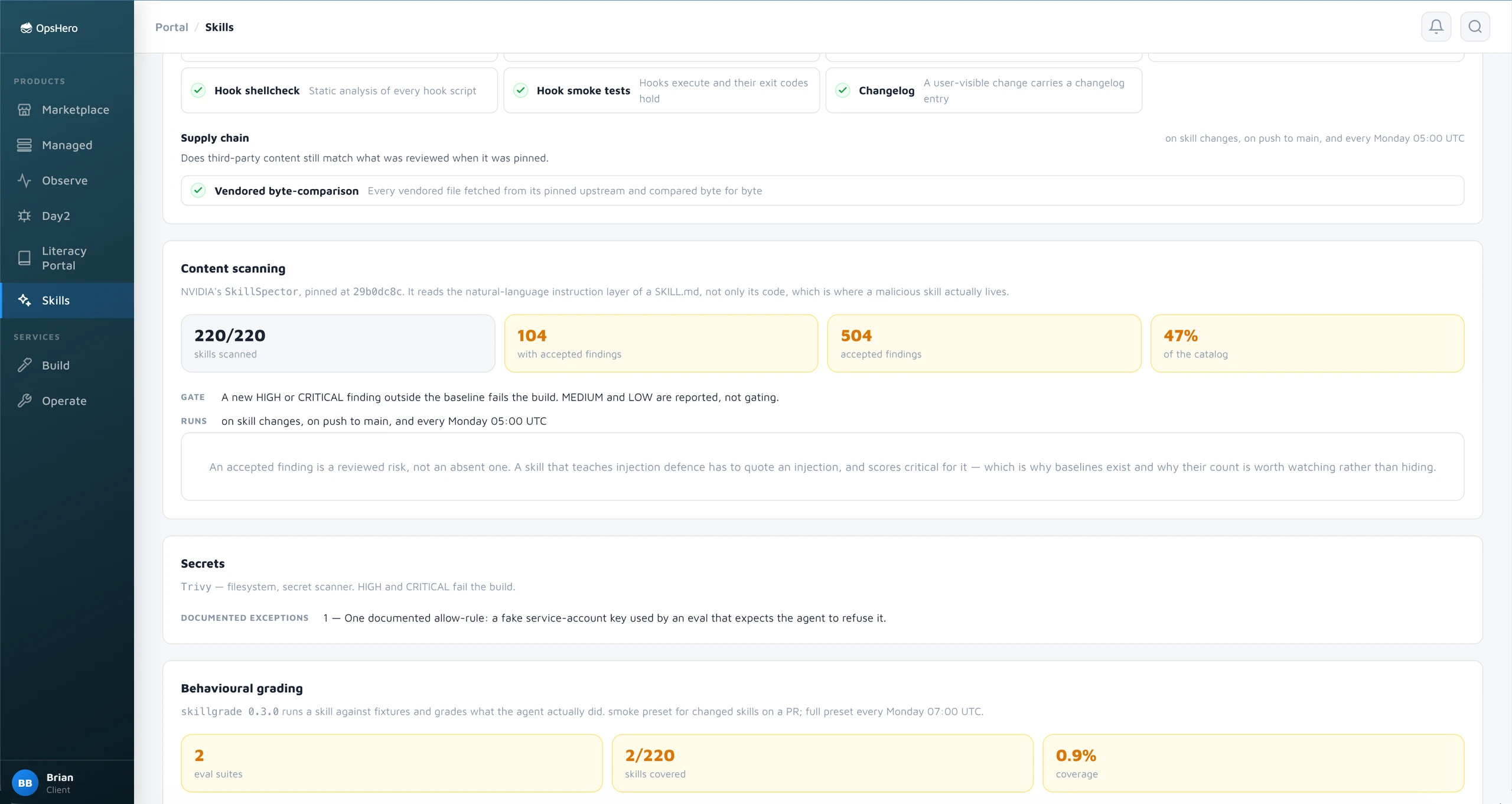
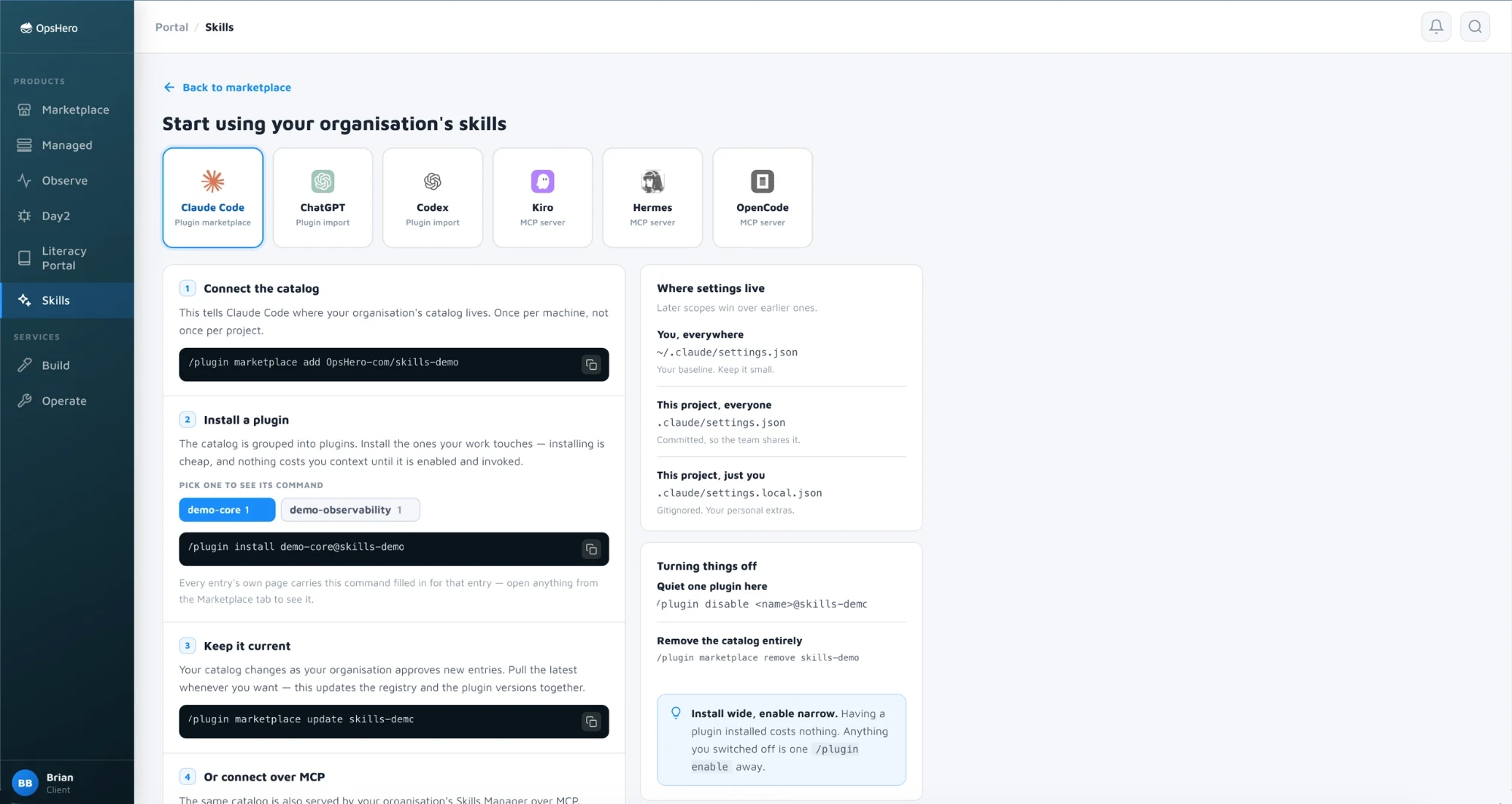
Most teams keep agent skills as files in a folder, copied from one laptop or project to the next. Skills Manager replaces the folder with a catalog.
Files copied by hand into each project and onto each laptop. It holds one kind of thing, nobody signed it off, and nobody can say which version an agent read.
One instance for your organisation. It holds skills and everything around them, each entry approved for you, and serves one pinned, approved version to the tools your people connect.
An employee submits, 12 verification and evaluation checks run before a human is involved, an administrator approves, and every agent surface picks it up without an operator doing anything. Further security and quality gates apply, and every skill is graded on a daily schedule.
A member of your organisation offers a skill, a command, an agent, a hook, an MCP server or a plugin to the catalog.
Everything in the catalog stays yours, in a documented format.
Stays yours
A second copy of your content somewhere else
There is no registry holding a duplicate of your entries, and nothing to reconcile when the two drift. If OpsHero went away tomorrow, you would still have every entry, in a format that is written down.
You keep every entry and its history, in a documented format that you own. That is why the source of truth is yours rather than our database.
Yes, by arrangement. We deliver the platform into your own Kubernetes; talk to us about what your environment requires.
It can, and pretending otherwise would not survive the first week. If your corpus is large and nothing in it may be deleted, that is a consulting problem before it is a product one and we would rather say so on a call. The engagement exists for exactly this.
Skills, commands, agents, hooks, MCP servers, plugins and bundles. The assumption that this is a skills-only product is the most common thing we correct.
One portal, one cluster list, one set of identities.
Managed Kubernetes on any machine you choose. No public IP needed.
Open ClustersSigned applications from one catalogue, deployed to any cluster.
Open ApplicationsDevelopment, staging and production, set up the same way.
Open EnvironmentsA separate microVM for every agent task.
Open SandboxesAutonomous agents with only the access you give them.
Open AgentsOpen-weight models on your GPUs, behind one OpenAI-compatible gateway.
Open ModelsOne OpenAI-compatible endpoint for every model, local or hosted.
Open AI GatewayThe Kubernetes API, scheduler and etcd, run for you.
Open Control PlaneDashboards and alerts that arrive with the cluster.
Open ObservabilityAn SRE agent that starts investigating before anyone is paged.
Open Day2A real instance, a real catalog, and an agent connecting to it during the call. Then the part that matters: what it would take to point it at your own skills.
